
Build A Golem Roblox Late Game Strategy
Grow the mine, swap filler for output, and spend Time Skips on workers that already print.
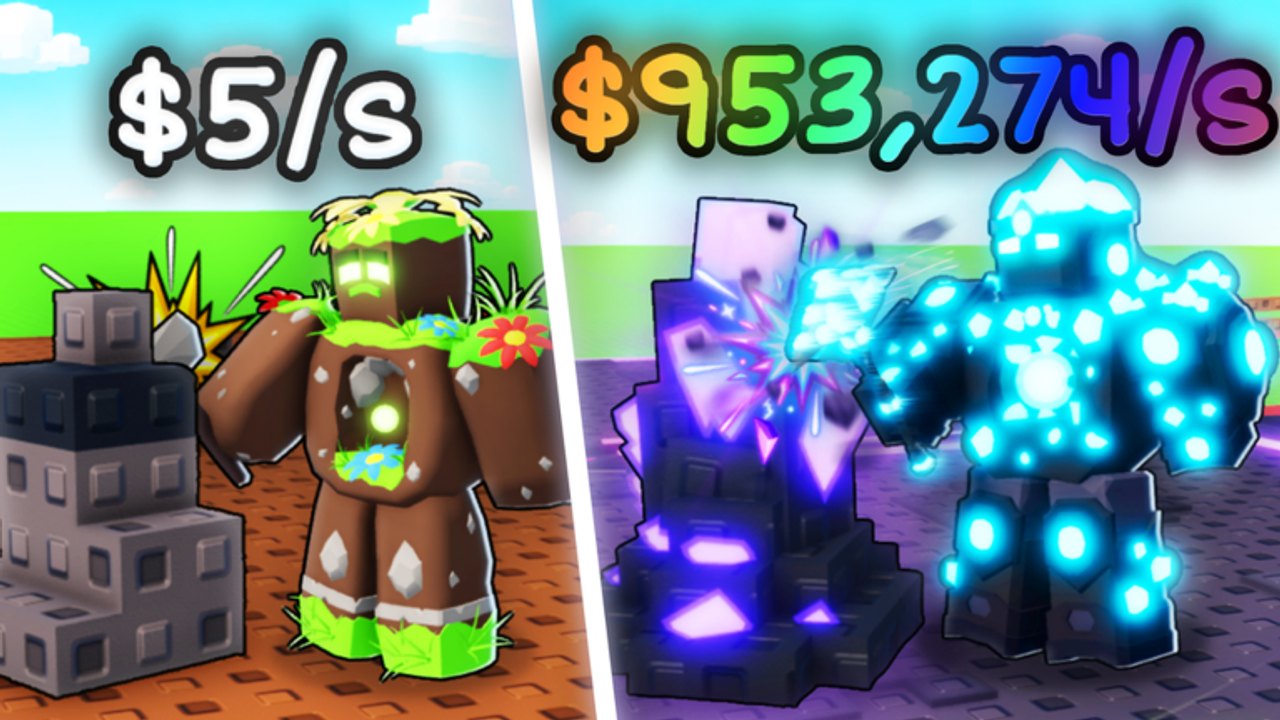
Late game in Build A Golem starts the session after you already have at least one complete golem printing without you hovering on the crafter. The official loop does not change: roll or buy parts, assemble, mine Cash, claim rewards, expand the mine, let workers run offline. What changes is what you refuse to do. You refuse to strip a working engine for fashion. You refuse to fire Time Skips on empty ground. You refuse to treat every roll as a full rebuild.
If you still lack a complete miner, this is the wrong page. Use starter golem builds and how to build golems. If you have two cheap workers assigned and Cash is stacking, you are in the right place. Playstyle context is the players hub. Spend ranks are the parts tier list.
Late game here is not a rebirth island, a PvP kingdom, or a spawner tech tree. Those belong to other titles. mesmerizing (really) shipped personal mines on six-player servers. Your late game is a bigger mine and better workers, not a war map.
Expand the mine before you hoard bodies
Official how-to copy tells you to claim rewards and expand the mine. Late accounts stall when they craft extra golems that have nowhere to work. Expansion is output. A parked complete body is a starter mistake you are now old enough to stop making.
Expansion order:
- Collect Cash so you see real income, not the shop’s optimism.
- If a finished golem is idle for lack of space, buy space before you buy another roll.
- Only after workers fit do you spend on replacements.
If expansion is expensive, it is still usually better than a roll streak that adds a seventh unmatched piece. Rolls do not create mine space. Space creates room for the rolls you already won.
Replace filler, do not throw the engine away
Filler is any seated part that did not raise Cash on the last cycle, or any spare that cannot complete a new worker this session. Late game is a replacement discipline:
- Change one slot on your best golem.
- Run a mining cycle.
- Keep the slot if Cash is up. Revert if Cash is flat or down.
- Park the loser. Do not delete the rest of the mix out of spite.
This is how a starter mix becomes a cash-engine on golem build tiers. It is slower than a full collage swap and much harder to fool yourself with. If you change three slots at once, you cannot tell which one mattered. That is not optimization; that is noise.
Use leftover inventory as a bench, not as a mandate. You are not required to seat a new piece just because it dropped. Output is the job. Looks are optional experiments after engines pay.
Time Skips belong on high output
THANKS is a 15-minute Time Skip. Shop skips, when you see them, are the same idea with a Cash cost. Late-game skip value is a ranking column of its own:
- Skip the strongest assigned lineup, not the experiment on the bench.
- Skip after collection so you are not overlapping a skip with unclaimed Cash you could have pocketed first.
- Do not buy a skip to cover a mine you dismantled for a restyle.
A skip inherits the output of the bodies in the ground. That is why replacing filler before a planned skip is correct, and replacing filler during a skip is sloppy. Set the engine, then multiply it.
If THANKS is still unclaimed on an older account, claim it from Settings (gear, top-left) the next time a strong lineup is working. Codes remain on the codes hub. Late game does not outgrow codes; it just stops wasting them.
Rolling is a replacement tool
Early rolling is how you find a first body. Late rolling is how you find a better slot. Budget it like a tool:
- Roll after workers are assigned.
- Stop when you have a candidate for a known weak slot, or when Cash would block expansion.
- Never roll to zero. Late accounts still need a buffer for mine growth.
Luck on rolls, as press write-ups describe it, is still not a rank. Convert the result or park it. A late inventory full of untested pieces is an early-game habit wearing endgame Cash.
When a roll is clearly worse than what you seated, do not “give it a chance” by wrecking the engine. Park it for a spare body if you have space. Spare bodies are how you experiment without touching the printer.
A weekly rhythm that does not melt progress
You do not need a spreadsheet. You need a rhythm.
- Login: collect, confirm every worker is assigned, expand if someone is idle.
- One improvement: one slot swap or one new complete body, not both unless Cash is overflowing.
- Skip window: if you have a Time Skip and the lineup is strong, fire it now, then do something else in real life.
- Logout: assignment check again. Offline mining is still the product.
On short days, skip the improvement. Collection plus assignment is a valid late-game session. The session planner has a repeat-session list for that mood. On long days, you may run an experimental mix on a spare golem. Promote it only after a cycle beats the occupant of that space.
Mistakes that look like late game
Rebuilding both starters every login because you can afford it. That is a starter account with a bigger wallet.
Ignoring mine expansion because rolling feels more like playing. That is how printers sit in the lobby.
Copying a shinier neighbor on a six-player server and stripping your engine to match. Their mix might be an experiment. Your Cash line is the only review that counts.
Waiting for an unofficial rarity table before you replace anything. This wiki will not publish one. Measure cycles. The tier list hub explains why function beats fake names.
Chasing another golem game’s rebirth loop. There is no island ladder here. If you feel bored, expand, skip a strong lineup, or take a break. Do not invent systems the crafter does not have.
How late game feeds the rest of the wiki
New parts still go through output versus filler on the parts tier list. New mixes still go through starter / engine / experiment on golem build tiers. New codes still go through Settings. Late game is discipline on top of those pages, not a replacement for them.
If a patch adds systems we can actually see in the official description—new ways to expand, new skip items, new crafter rules—revisit this page’s order, not its tone. Tone stays: engines first, filler out, skips on output, mine space before hoarding.
Treat Time Skips as a tax you pay to skip idle minutes on a strong lineup, not as a patch for a weak one. Rebuild the weak miner with one honest slot swap; multiply the strong miner when the skip is in your pocket.
Frequently Asked Questions
Quick answers for codes, mining, and crafter questions.
When does late game start in Build A Golem?
After at least one complete golem prints without you babysitting the crafter. If that is not true yet, use starter golem builds instead.
Should I expand the mine or buy more parts first?
Expand when a finished worker has nowhere to mine. Parts cannot print from the lobby. Official how-to text already lists expanding the mine next to claiming rewards.
How do I replace filler without wrecking my income?
Swap one slot, run a cycle, keep it only if Cash rose. Rank candidates with the parts tier list rather than rebuilding the whole body.
Where should I use THANKS or other Time Skips now?
On the highest-output assigned lineup, after you collect. Never on a bench experiment or an empty mine. Claim codes from Settings using the codes hub.
Is there a rebirth or island step I am missing?
No. This is not Build a Golem Army. Late game is more mine space, better seated parts, and skips on workers that already mine—not spawners, kingdoms, or rebirth islands.